🎯 Learning Objectives
- Explore how a sequence of binary digits can represent numbers.
- Convert between decimal and binary numbers.
💬 Key Vocabulary
- representations
- decimal numbers
- symbols
- binary numbers
- binary digits
- conversion (between number systems)
📝 Starter Activity – Boins
Take a look at these strange coins (let’s call them ‘boins’).
You only have one of each.
Is there any amount that you won’t be able to pay with these?
You won’t be asked to pay for anything over 31.

📖 You’ve seen this before
What do we call these symbols?
How many of them are there?
0 1 2 3 4 5 6 7 8 9
Answer
We call these symbols digits.
There are 10 of them.
A sequence of decimal digits represents a number.

We use 10 digits and the decimal (base-10) system for numbers.
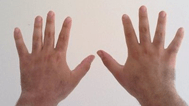
This is probably because we have 10 fingers to count with.

📖 Enter binary
We will use two digits and the binary (base-2) system for numbers.
Same reasoning as in decimal.

What do we call these symbols?
How many of them are there?
0 1
Answer
We call these symbols binary digits.
There are only 2 of them.
A sequence of binary digits represents a number.



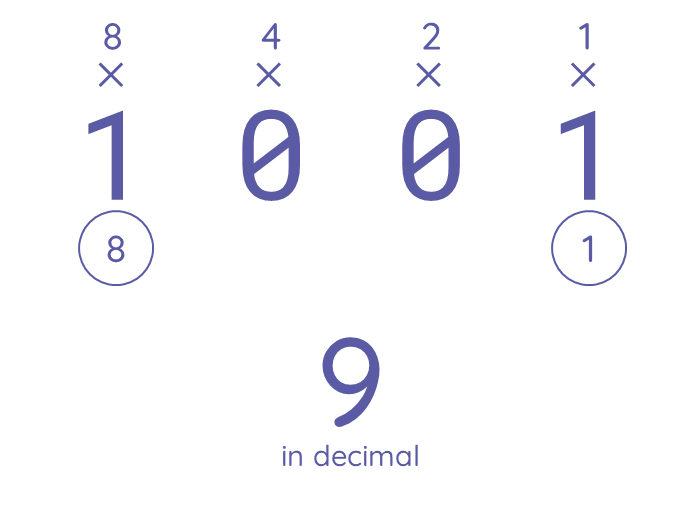
In binary, we use 2 digits and the binary (base-2) system for numbers.
It is convenient for systems using switches.
In a sense, binary digits act like switches:
Flip one to on, and the corresponding multiplier is included in the sum

📖 Convert binary to decimal: instructions
Write multipliers over the bits:
Start with 1 on the right, and double as you go from right to left.
For each bit set to 1, select its corresponding multiplier.
Add up the selected multipliers: the sum is the decimal number.

🥇 Level 1: Bits to numbers
Download the Level 1 Worksheet below and solve the problems.
‘Translate’ binary numbers back to the familiar decimal system.

📖 Convert Decimal to binary: instructions
Now, we will do the opposite: start with a decimal number and work out the corresponding binary number.
There are a few ways to do this.
We are only going to examine one of them.

- Which multipliers do I select to ‘assemble’ a sum of 13?
- Which binary digits do I set to 1?
🥈 Level 2: Numbers to bits
Now, you will be given some numbers in decimal.
Can you work out the corresponding binary numbers?
Use the worksheet below:
🥉 Level 3: Calculating bits using spreadsheets
Download the Excel file below, they will show you how to use Excel and spreadsheets to automatically calculate numbers to bits and bits to numbers.
In this lesson, you…
- Explored how numbers can be represented as sequences of decimal and binary digits.
- Converted between decimal and binary numbers.
Next lesson, you will…
- Examine how we count the number of binary digits in sequences that are really long.
🏅 Level up
🥇 Level 1
- Upload the Level 1 – Bits to numbers activity to Teams.
🥈 Level 2
- Upload the Level 2 – Numbers to bits activity to Teams.
🥉 Level 3
- Upload the Level 3 – Calculating bits using spreadsheets activity to Teams.