In this unit, you will…
- Learn that information can be represented in various ways, including how text and numbers can be represented using binary digits.
- Understand what binary digits (bits) are, how to measure the size of binary representations using units like bytes, kilobytes, and megabytes, and why binary is used in computing.
- Develop skills in converting numbers between decimal and binary and understand how characters are represented as sequences of symbols.
In this lesson, you will…
- Examine how symbols can be used to store, communicate, and process information.
🎯 Learning Objectives
- Describe examples of representations
- Recall that representations are used to store, communicate, and process information
- Provide examples of how different representations are appropriate for different tasks
💬 Key Vocabulary
- Representations
- communication
- symbols
- processing
- storage
📝 Starter Activity – Why do you think people invented writing?
Remember that writing is a way to represent information, and humans invented writing to solve certain kinds of problems. By examining the ways in which humans represent information, we can build an understanding of how computers represent information and how they help us solve these problems.
So why do you think people invented writing?
📝 Museum Visit
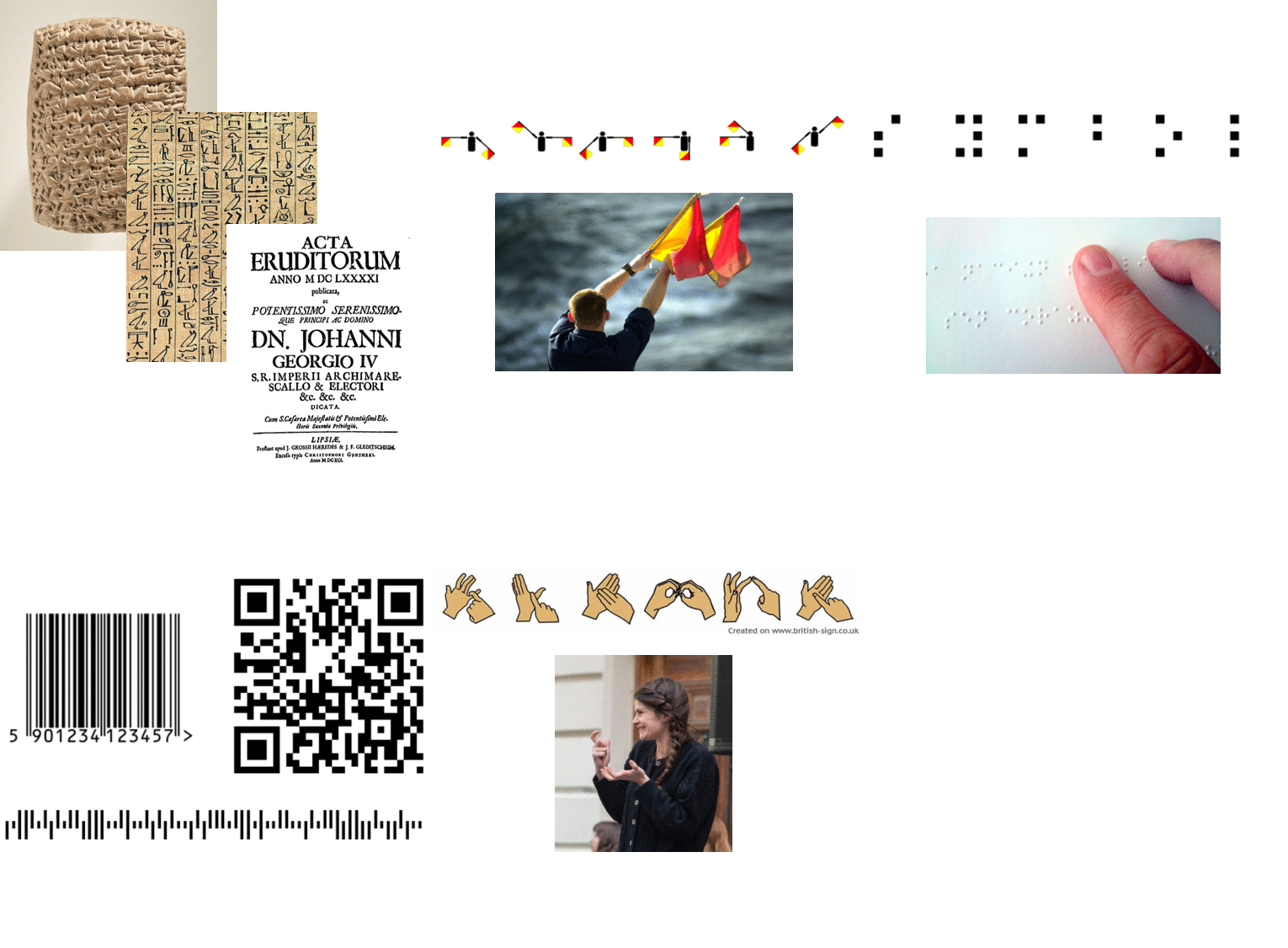
- Examine the exhibits in the photo gallery.
- There are many different types of representations.
- There are many different types of information.
 The Phaistos Disc, from Crete (2nd millenium B.C.)


Think, write, pair, share – Think about the question, write down you answer, then pair and share
- What do you think these pieces of writing might be about?
- Why do you think people needed to write all this information down?
📖 Reflection – link to Computer Science
Why do you think people needed to write that information down?
- To store it (across time)
- To communicate (across distance)
- To process it
Sequences of symbols can represent any piece of information.

📝 Choosing Representations
Here are a few additional examples of sequences of symbols, which represent information.
Think, write, pair, share
Who decides on what these sequences of symbols mean?
In which situation would each representation be used?
Write your answers on your Word file.
📖 Meanings
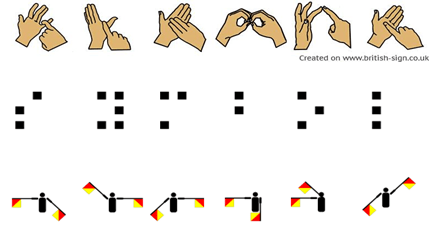
Different sequences of symbols can represent the same thing.
Example:
symbol
The same sequence of symbols can represent different things.
Example:
dab
- a kind of fish
- a sudden blow or thrust
- a gentle touch or stroke
- a small amount
- a skillful person
- a dance move
- the musical notes D, A and B
- the number 3499
- Digital Audio Broadcasting
📖 Communication at a distance
Two friends live in huts on opposite sides of a great lake. How can they exchange messages from a distance?
Discuss this with the person next to you. Write down the ideas you come up with into your Word file of notes.
(The friends can’t use mobile phones).

In this lesson, you…
- Examined how symbols can be used to store, communicate, and process information.
Next lesson, you will…
- Use paper, lights, and sound to send and receive messages.
🏅 Level up
🥇 Level 1
- Upload your notes from this lesson to Teams, depending on the quality, quantity, grammar and spelling of these notes you will be awarded Level 1 and/or 2.
🥈 Level 2
- Upload your notes from this lesson to Teams, depending on the quality, quantity, grammar and spelling of these notes you will be awarded Level 1 and/or 2.
🥉 Level 3
- Go to this page https://crewsproject.wordpress.com/write-your-name-in-an-ancient-writing-system/
- Choose one of the ancient forms of writing that are shown, use the worksheet and the videos here to write your own name in these ancient languages using the skills you have learnt today.
- Then upload your name to Teams, you will likely need to use paper to write it so take a photo with your phone and upload it.